COP31 in Antalya has closed with electrification at the centre of the global agenda, and the evidence published around it carries a double message for Africa and the Caribbean. The largest energy supply shock in history is putting recent access gains at risk, yet the most striking progress is not waiting for permission: households, communities and island nations are financing and setting the pace of the transition themselves. The task for policy and finance now is to catch up with them, and to make sure the people paying out of their own pockets are protected, not left carrying the cost alone.
New research and developments
1. New flagship report — The energy crisis threatens recent access gains
Published 19 November 2026. The International Energy Agency’s World Energy Outlook 2026, released during COP31, describes the disruption to energy flows through the Strait of Hormuz as the largest energy supply shock the world has faced, with cumulative losses of about 2.8 billion barrels of oil by November 2026. The IEA finds that progress on electricity and clean cooking access accelerated in 2025, but warns that higher fuel prices and supply shortages in 2026 risk slowing further gains across emerging and developing economies.
For Africa, the report underlines a familiar imbalance: the continent holds about 60% of the world’s best solar resources but accounts for only about 1% of installed solar PV capacity. African energy investment is rising, up about 11% to roughly US$110 billion in 2026, and solar PV capacity is projected to grow sixfold over the next decade under stated policies. The IEA cautions, however, that investment in grids, storage and system flexibility has not kept pace, and that much of the projected growth serves existing electricity users rather than connecting people who still have no access at all.
Why it matters: Energy security and energy access are now the same fight. A crisis caused by imported fuel dependence lands hardest on households and countries with the least, and the surest protection is affordable, locally generated electricity, backed by grids and storage strong enough to deliver it to first-time users, not only to those already connected.
Read the report — IEA · IEA reports page
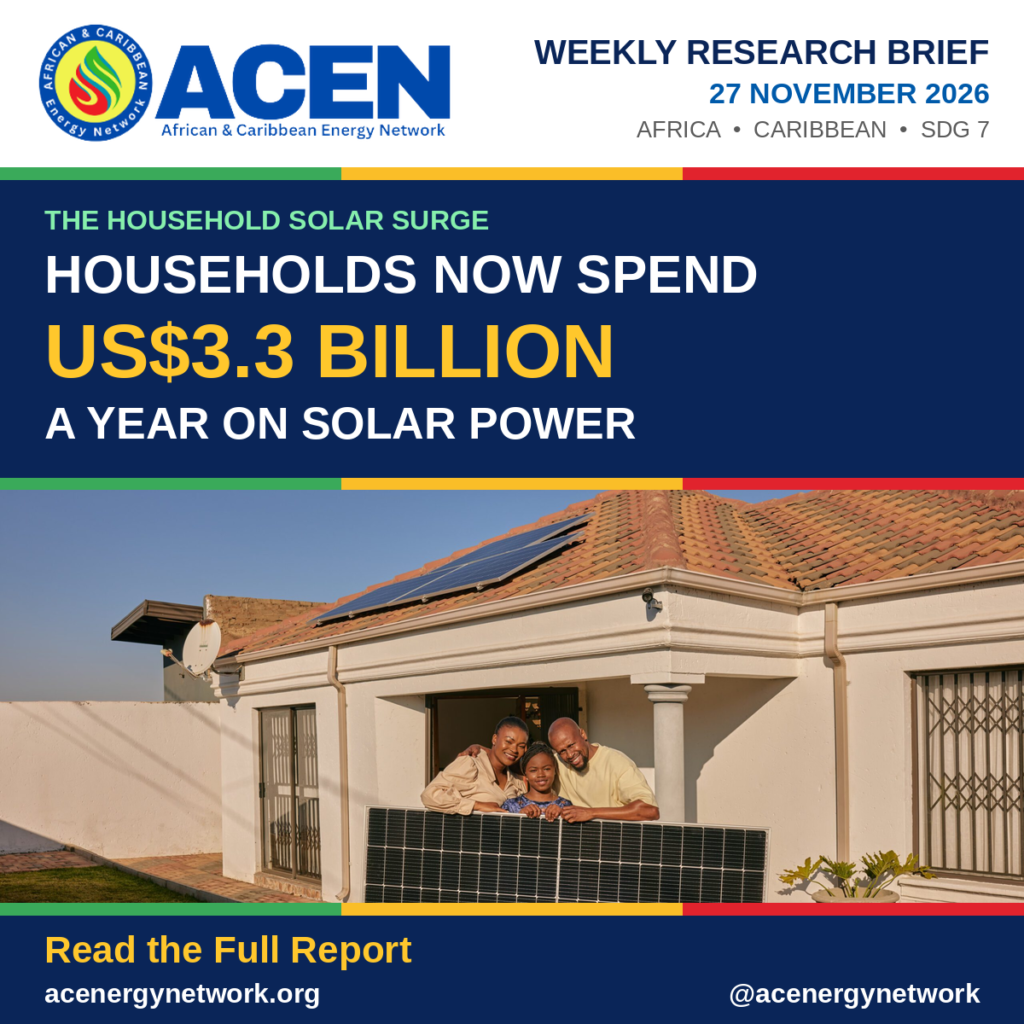
2. New report — African households now spend US$3.3 billion a year on solar
Published 13 November 2026, at COP31 in Antalya. The third edition of the Landscape of Climate Finance in Africa, published by Climate Policy Initiative with FSD Africa and the governments of Norway and the United Kingdom, finds that private climate finance in Africa has more than tripled since 2019/20 to US$26.5 billion a year in 2023/24, and that 76% of it is raised domestically, from African banks, businesses and households.
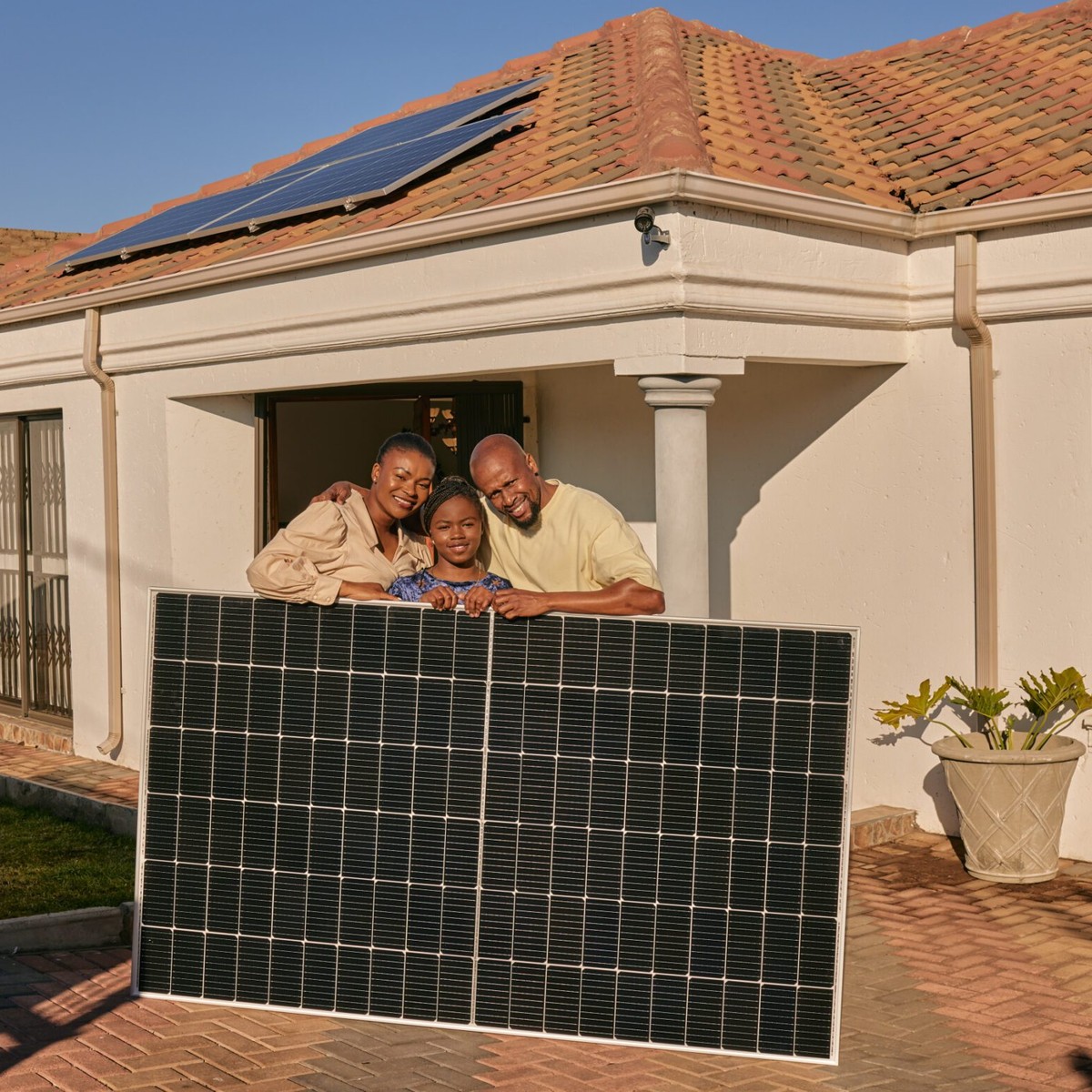
The standout finding concerns households themselves. Household climate investment more than doubled to US$5.1 billion a year, and household spending on solar PV rose nearly fivefold to US$3.3 billion a year, with small-scale solar driving more than 90% of that growth. Total climate finance across the continent reached US$74 billion a year, still far below the estimated US$300 billion to US$572 billion a year needed for mitigation alone, and the report notes that low-income countries received less international public finance.
Why it matters: Communities are not waiting to be reached. Families and small businesses, very many of them women-led, are buying their own way out of energy poverty panel by panel. That determination deserves policy that lowers their costs, financing that reaches poorer households rather than only the better-off, and consumer protection strong enough that no family is trapped by poor-quality equipment or unfair repayment terms.
Read the CPI announcement · Read the full report (PDF)
3. New collective target — Island nations aim for 30 GW of renewables by 2035, led by the Caribbean
Announced 11 November 2026, at the COP31 SIDS Ministerial Dialogue in Antalya. Small Island Developing States have adopted a collective target of about 30 GW of installed renewable energy capacity by 2035, roughly 170% above the 11.2 GW installed in 2025, based on an assessment by the International Renewable Energy Agency (IRENA) of targets across 55 island states and territories. Island nations reached their previous 10 GW target five years ahead of schedule.
The Caribbean is expected to contribute the largest share of the growth, rising from about 7.5 GW in 2025 to about 19.5 GW by 2035. The next phase of IRENA’s SIDS Lighthouses Initiative will focus on regional pooled procurement, grid modernisation and digitalisation, smart electrification, and offshore renewables and ocean energy, with a 2027 Plan of Action to follow.
Why it matters: For island states, renewable energy is energy security: every locally generated kilowatt-hour is one less imported fuel bill exposed to the next price shock. The Caribbean’s leading role in this target is a statement of intent. Whether it becomes lower bills and more reliable power will depend on storage, modernised grids and procurement that brings island-scale costs down.
Read the IRENA announcement · Read the coverage — Saur Energy
4. New delivery package — COP31 puts electrification finance behind implementation
Presented 19 November 2026; finance coalition announced 10 November 2026. The COP31 Global Climate Action Agenda Electrification Delivery Package brings together more than 150 countries, the European Union, 37 cities and over 260 businesses. Members of the Utilities for Net Zero Alliance announced combined annual spending plans of at least US$156 billion across electricity networks, renewable generation and storage. The package supports the COP31 35-by-35 Global Electrification Pledge, which aims to raise electricity’s share of global final energy consumption from about 23% to 35% by 2035.
Alongside it, a new Electrify Now Finance Coalition will be co-chaired by the African Development Bank and the World Bank from 2027, bringing together governments, development banks and private investors to mobilise electrification finance, with IRENA supporting countries on grids, project preparation and access to finance.
Why it matters: Pledges are plentiful; delivery machinery is what has been missing. A finance coalition co-led by the two institutions behind Mission 300 creates a direct channel through which access projects in Africa and the Caribbean can compete for capital. Its value will be measured in connections delivered and bills made affordable, not in announcements.
Read the Delivery Package coverage · Read about the Electrify Now Finance Coalition
Newly relevant: women-led and community-centred solutions
Counting what women experience — partner briefing, 5 November 2026, Nairobi. A coalition led by the World Bank’s Energy Sector Management Assistance Program (ESMAP), with the IEA, IRENA, UN Women, ENERGIA, GWNET and others, has mapped gender and energy data across 40 country profiles for its Gender Indicators for Sustainable Energy initiative: 2,978 indicators across 28 categories covering energy access, energy poverty and employment. The mapping finds women worse off on energy poverty measures, including greater difficulty paying energy bills in the countries measured. A baseline across 50 priority countries and a full framework and report are due by June 2027. What is not measured is rarely fixed; sex-disaggregated energy data is how women’s access gaps become visible, and then actionable.
Read the partner briefing (PDF)
Implementation under way in West Africa — ECOWAS and World Bank mission, 16 to 20 November 2026. ECOWAS and the World Bank have begun an implementation-support mission for the Regional Access Increase and Sustainable Energy (RAISE) Project, a US$160 million initiative for underserved communities in Togo and The Gambia that became effective on 29 October 2026. Its targets are to electrify 1,800 localities, connect 202,000 households and facilitate 242 MW of renewable generation capacity. These are targets, not yet results, and ACEN will watch for delivery reporting as the mission’s work proceeds.
ACEN’s perspective
ACEN will follow the money agreed at COP31 and report on whether it reaches the communities it was promised to. We will champion the households and small businesses, very many of them women-led, who are already financing their own solar power, and we will press for the consumer protection, quality standards and fair financing that their investment deserves. ACEN will support Caribbean cooperation on pooled procurement, storage and grid modernisation as the region leads the island target it helped set. We will continue to call for sex-disaggregated energy data in national reporting, so that women’s energy poverty is counted and addressed. And ACEN will measure every pledge, including our own advocacy, against one test: affordable, reliable energy in the hands of the people who have waited longest for it.
African & Caribbean Energy Network (ACEN)
acenergynetwork.org · @acenergynetwork