November 9, 2026 | African & Caribbean Energy Network (ACEN)
Commonwealth leaders have renewed their commitment to accelerating the global energy transition, calling for increased investment in renewable energy, electricity storage, and modern power infrastructure while emphasizing the importance of a fair and equitable shift away from fossil fuels.
The announcement, outlined in the communiqué issued following the Commonwealth Heads of Government Meeting in Antigua and Barbuda, highlights the growing urgency of strengthening energy systems, particularly in developing countries and small island developing states (SIDS).
For nations across Africa and the Caribbean, the message is significant: achieving a sustainable energy future requires more than ambitious climate commitments. It demands accessible financing, technological cooperation, infrastructure development, and policies that recognize the economic realities of developing nations.
Accelerating Investment in Renewable Energy
The Commonwealth’s position emphasizes several critical areas for advancing cleaner and more resilient energy systems, including renewable electricity generation, battery storage, electricity grid modernization, and electrification.
These investments are essential to improving energy security, reducing dependence on carbon-intensive energy sources, and expanding reliable electricity access.
Across Africa and the Caribbean, many communities continue to experience energy challenges, including unreliable electricity supplies, high energy costs, and inadequate infrastructure.
Expanding renewable energy capacity offers an opportunity to address these challenges while supporting economic development, job creation, education, healthcare, and environmental sustainability.
However, successful implementation will depend on ensuring that developing nations have access to affordable financing, appropriate technologies, and the technical expertise necessary to develop and maintain modern energy infrastructure.
A Just and Equitable Transition Away from Fossil Fuels
One of the most significant elements of the Commonwealth’s declaration is its reaffirmation of support for transitioning away from fossil fuels in a just, orderly, and equitable manner.
The communiqué also reinforces the broader ambition of achieving net-zero emissions by 2050.
Importantly, the Commonwealth’s position recognizes that countries face different economic circumstances, development priorities, and energy needs.
For resource-producing nations, particularly those whose economies depend heavily on oil and gas revenues, the transition presents both challenges and opportunities.
A just energy transition must consider the need to protect livelihoods, maintain economic stability, strengthen energy security, and create opportunities for communities that have historically experienced limited access to reliable electricity.
Rather than treating the transition as an immediate end to fossil fuel production, the Commonwealth’s approach acknowledges the importance of managing change responsibly while accelerating investment in cleaner alternatives.
Guyana’s Energy Development at a Crossroads
Guyana provides an important example of the complex relationship between fossil fuel development and renewable energy ambitions.
As one of the world’s emerging petroleum-producing nations, Guyana continues to expand its oil and gas industry while pursuing initiatives intended to strengthen electricity generation and support its low-carbon development objectives.
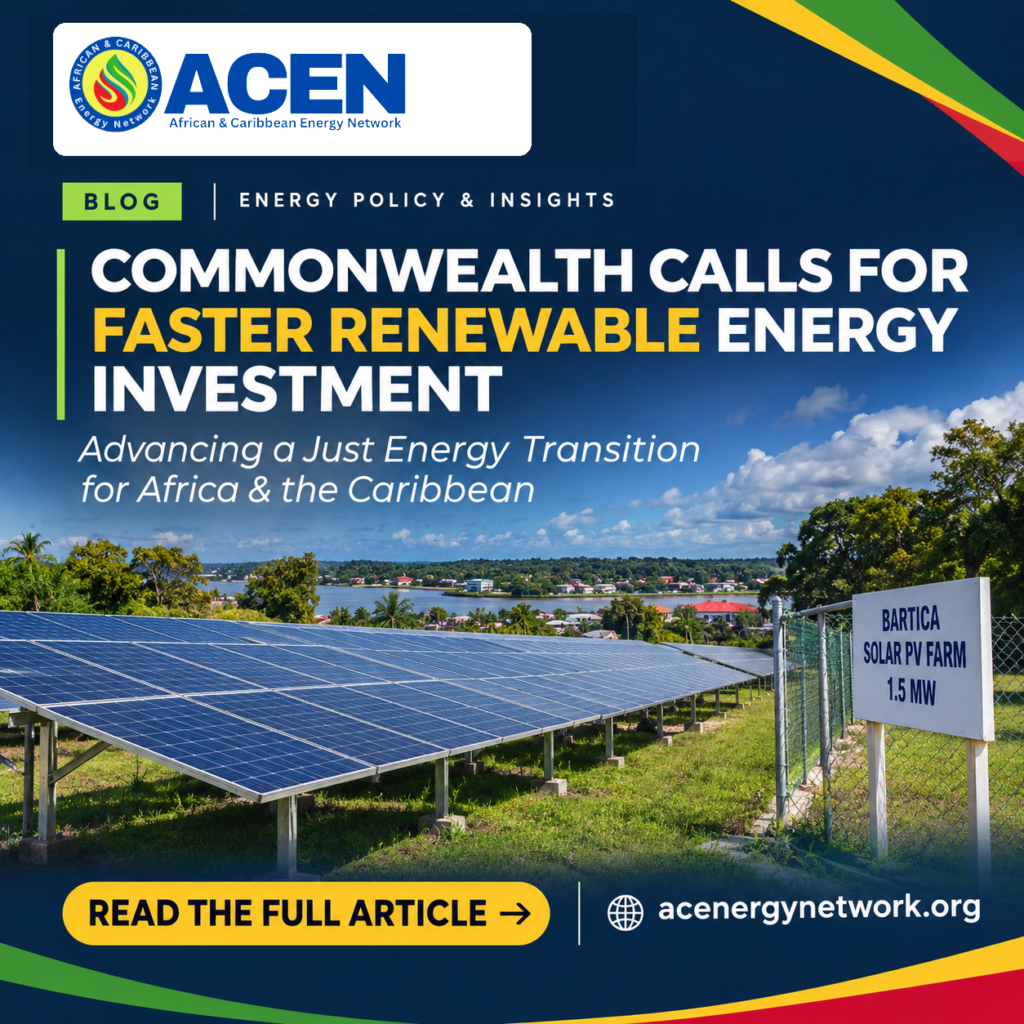
These initiatives include solar energy development, proposed hydropower investments, and the country’s gas-to-energy project, which aims to utilize offshore natural gas resources for domestic electricity generation.
The challenge lies in balancing the economic opportunities associated with petroleum production against the need to develop a diversified, resilient, and increasingly sustainable energy system.
The Commonwealth’s declaration does not impose a new deadline for Guyana to end oil production. Instead, it establishes a collective policy direction that encourages member states to advance cleaner energy systems while considering their individual development circumstances.
For Guyana and other energy-producing countries across Africa and the Caribbean, this approach reinforces the importance of long-term planning, responsible resource management, and investment in energy diversification.
Why This Matters for Africa and the Caribbean
The Commonwealth’s renewed commitment carries particular importance for regions where energy poverty continues to limit economic and social progress.
Reliable and affordable electricity is fundamental to achieving the United Nations Sustainable Development Goals, particularly SDG 7: Affordable and Clean Energy, which calls for universal access to affordable, reliable, sustainable, and modern energy by 2030.
For African and Caribbean countries, accelerating the energy transition must also mean addressing longstanding inequalities in energy access.
Renewable energy investment can support rural electrification, strengthen healthcare facilities, improve educational opportunities, expand economic participation, and create pathways for women and young people to enter the growing clean energy workforce.
Small island developing states face additional challenges, including exposure to climate-related disasters, dependence on imported fuels, and the high costs associated with developing and maintaining electricity infrastructure.
Greater international cooperation and improved access to climate and development financing will therefore be essential to ensuring that these nations are not left behind.
ACEN’s Perspective: Energy Access Must Remain at the Center
For the African & Caribbean Energy Network (ACEN), the Commonwealth’s call reinforces a fundamental principle: the global energy transition must deliver meaningful improvements in people’s lives, particularly in communities where energy poverty remains a daily reality.
Transitioning toward cleaner energy systems is essential, but success must be measured not only by emissions reductions or installed renewable energy capacity, but also by the number of households, schools, healthcare facilities, and businesses gaining access to dependable and affordable electricity.
ACEN will continue advocating for energy policies and investment strategies that place energy access, economic opportunity, regional cooperation, and community development at the forefront.
This includes encouraging stronger collaboration between African and Caribbean nations, supporting knowledge exchange, promoting investment opportunities, and highlighting the role of women and young professionals in shaping the future of the energy sector.
As governments and international institutions advance their commitments, it is equally important that local communities benefit directly from energy investments.
Turning Commitments into Action
The Commonwealth’s latest declaration represents another important signal of international support for accelerating renewable energy development and advancing a fair energy transition.
The challenge now is implementation.
For Africa and the Caribbean, progress will require coordinated efforts among governments, financial institutions, energy companies, development partners, and civil society organizations.
Investments must translate into stronger electricity networks, expanded renewable energy capacity, improved affordability, and greater opportunities for underserved communities.
Ultimately, a successful energy transition must be both environmentally sustainable and socially inclusive.
The future of energy must not simply be cleaner. It must also be more accessible, affordable, reliable, and equitable for everyone.
Through its continued advocacy for SDG 7, the African & Caribbean Energy Network remains committed to advancing a future in which energy access serves as a foundation for sustainable development, economic empowerment, and shared prosperity across Africa and the Caribbean.
About the African & Caribbean Energy Network (ACEN)
The African & Caribbean Energy Network is committed to advancing energy access, fostering collaboration, and supporting sustainable energy development across Africa and the Caribbean. Through advocacy, education, partnerships, and knowledge exchange, ACEN works toward ending energy poverty and accelerating progress on Sustainable Development Goal 7.
Website: www.acenergynetwork.org
Source: Kurt Campbell, “Commonwealth calls for faster renewable energy investment and transition away from fossil fuels,” Fueled, November 8, 2026.