The clean energy investment story coming out of Africa in 2026 is, in headline terms, a good one. Multilateral development banks have made landmark commitments. Major corporate players have announced multi-billion dollar programmes. The Africa Forward Summit in May produced €27 billion in pledges that attracted global attention. The numbers are the largest they have ever been. And yet the distance between headline investment and deployed capital reaching the communities that need it most remains the defining challenge of the Africa clean energy transition — and the most important signal for investors, developers, and practitioners to understand clearly.
The Scale of the Opportunity
Africa’s clean energy investment landscape in 2026 reflects a continent at an inflection point. The International Energy Agency estimates that Sub-Saharan Africa alone needs approximately $90 billion per year in clean energy investment through 2030 to stay on an SDG 7-compliant pathway. Current annual flows — at around $28 billion as of 2025 — represent roughly 30% of that requirement. The gap between commitment and need is not narrowing as quickly as the political temperature around Africa clean energy would suggest.
This is not a reason for pessimism. It is a reason for precision. The boom is real — and so is the context that gives it meaning.
Where the Capital Is Moving
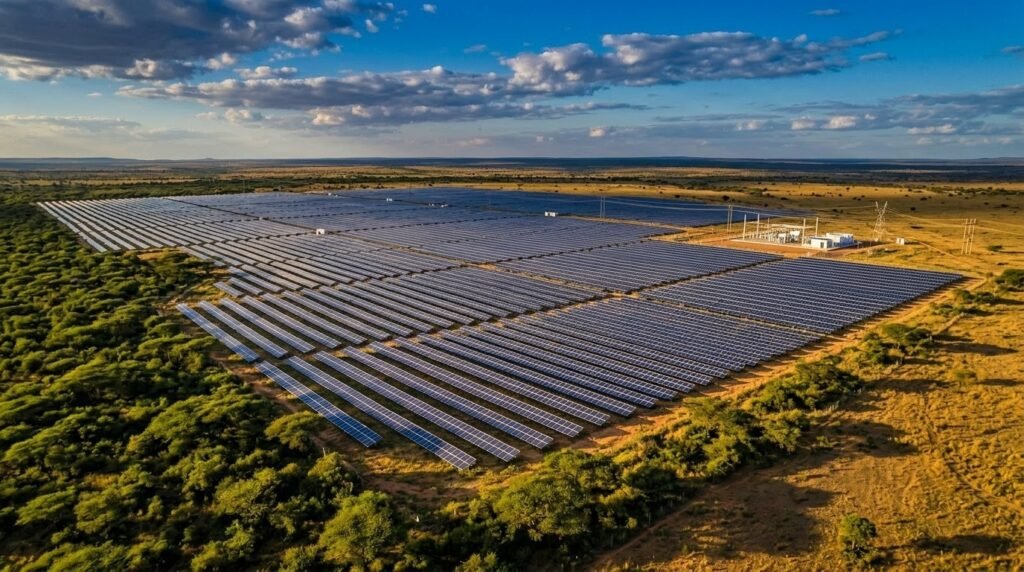
Utility-scale solar continues to dominate the investment landscape. South Africa, Kenya, and Egypt are the continent’s most mature markets for independent power producer procurement, offering regulatory frameworks and offtake structures that institutional capital recognises. Combined, these three markets absorbed a disproportionate share of sub-Saharan Africa’s clean energy finance in 2025, reinforcing a pattern in which the most developmentally advanced markets attract capital and frontier markets wait for the spill-over that does not always come.
Nigeria’s Electricity Act 2023 implementation has created new entry points. The distribution privatisation rounds underway in 2026 represent the first genuinely large-scale opportunity for private capital to enter Nigeria’s distribution sector — a market of 220 million people where access rates remain well below 60% and where the commercial case for solar-plus-storage mini-grids is among the strongest on the continent.
Off-grid and mini-grid investment is accelerating, if unevenly. The World Bank’s Distributed Access through Renewable Energy Scale-up programme (DARES) and the African Development Bank’s Mission 300 initiative are both channelling concessional capital toward distributed energy solutions — a structural shift from earlier cycles when utility-scale generation absorbed the overwhelming majority of development finance energy allocations.
The blended finance mechanism remains the enabling architecture for most private capital entry into frontier markets. First-loss facilities from DFIs — Proparco, British International Investment, the US Development Finance Corporation, European Investment Bank — are the instruments that convert emerging market risk into acceptable risk-return profiles for commercial co-investors. Without these concessional first-loss layers, a significant share of the announced pipeline does not close.
What the Boom Means — and Doesn’t Mean
The record investment headlines of 2026 carry genuine significance. The Africa Forward Summit’s €27 billion in commitments — with roughly €14 billion earmarked for energy — represents a scale of coordinated corporate and institutional commitment that has no precedent in Africa’s clean energy history. EDF’s 2 GW hydropower programme, TotalEnergies’ $10 billion continental portfolio, Meridiam’s wind expansion in Kenya: these are real projects with real capital behind them.
But practitioners working in the sector know what the headlines don’t show. Multi-year commitments are not the same as disbursed capital. Financial close on a utility-scale project typically takes three to five years from announcement. The communities furthest from existing grid infrastructure — rural households in northern Mozambique, dispersed settlements in the DRC’s Eastern provinces, Haiti’s agricultural interior — are not served by the projects that attract the most press. Large-scale generation does not automatically translate to last-mile access.
The more meaningful signal for investors watching the Africa clean energy investment boom is the diversification of the pipeline. The fact that Mission 300 explicitly targets 300 million people with distributed energy solutions — not just grid extension — represents an institutional recalibration that changes the composition of the bankable project universe. The fact that carbon credit layering under Article 6 is beginning to improve the economics of off-grid and clean cooking projects creates new revenue streams that were not available five years ago.
The Investment Case in 2026
For institutional investors, the Africa clean energy investment case in 2026 is stronger than at any previous moment — and more nuanced. Three observations define the landscape.
First: the origination gap is the primary bottleneck.
Capital availability is no longer the binding constraint in most market segments. The constraint is deal flow. Investment committees have mandates. Capital is allocated. The missing ingredient is a pipeline of bankable projects that institutional co-investors can access through credible local intermediaries. Networks and relationships remain the primary competitive advantage in origination-constrained markets.
Second: SDG 7 alignment is increasingly a portfolio requirement, not an impact add-on.
The HLPF 2026 SDG 7 in-depth review in July will generate ministerial-level commitments that shape how multilateral capital is directed in the subsequent planning cycle. Investors whose mandates are structured to capture SDG 7-aligned deal flow will have access to the most heavily catalysed pipeline segments — those where DFI co-investment and concessional capital structuring make private returns most achievable.
Third: the window for positioning is now.
The capital mobilised at the Africa Forward Summit and aligned with the HLPF process will deploy over the next 24 to 36 months. The developers and government counterparts receiving that capital are already in conversations with their preferred co-investors. Investors who build their network and position their mandates before those conversations close will access opportunities that later entrants will compete for at premium valuations.
ACEN’s Role in the Investment Ecosystem
The African and Caribbean Energy Network exists to connect the professionals who are doing this work — investors, project developers, policymakers, and practitioners — across both regions and across the full range of the clean energy investment value chain. The boom is real. The opportunity is real. And the gap between capital and community remains real. Closing that gap requires the information, relationships, and networks that convert committed capital into deployed kilowatts.
ACEN members get real-time intelligence on the markets and policy moments that shape the investment landscape — including HLPF 2026, where SDG 7 is under formal review this July. They get peer connections with the practitioners who originate, structure, and execute the deals behind the headlines. And they get access to a growing platform of courses, resources, and advisory support built specifically for the Africa and Caribbean clean energy sector.
Published by the ACEN Editorial Team. The African & Caribbean Energy Network (ACEN) is a membership-based platform connecting investors, policymakers, and energy professionals across Africa, the Caribbean, and the global diaspora. For membership inquiries, contact info@acenergynetwork.org.